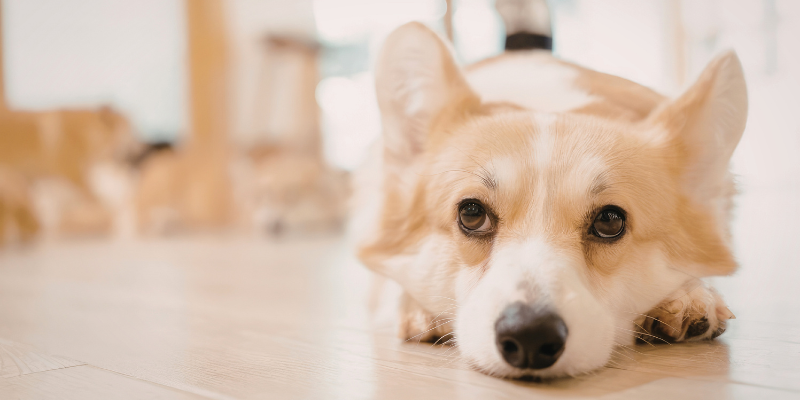
It’s 4 am, and you have just awoken to that most dispiriting of sounds: your dog vomiting in the house *sigh*. But wait, the vomit is foamy and yellow – is that a worry?
Here’s why your dog might vomit yellow fluid, and when it warrants a vet check.
What does yellow vomit mean in dogs?
A yellow vomit indicates that your dog has vomited despite having an empty stomach and has therefore brought up fluid that is a mix of stomach juices and refluxed bile.
- Your pet could be vomiting due to an actual gut irritation, for example:
- If they’ve eaten a food that didn’t agree with them, or something that was spoiled or toxic
- If they’ve got a tummy bug
- If they’ve got a blockage, e.g. a ball of hair, or a non-food item they’ve eaten
- If they’ve got an underlying stomach disease, such as inflammatory bowel disease
- Bilious vomiting syndrome – more on this below!
Alternatively, your pet could be vomiting due to another type of health issue that is causing them to feel nauseous, such as pancreatitis (inflammation of the pancreas organ) or liver disease.
What is bilious vomiting syndrome?
Bilious vomiting syndrome occurs when a dog’s empty tummy becomes irritated by refluxed bile, causing them to vomit. It is most frequent in pets who are fed one meal a day, but it can sometimes occur in those fed twice daily, too.
Dogs with this condition typically vomit at the time of day (or night) when their tummy has been empty for the longest stretch of time. This may occur sporadically, or in a bout of several days in a row or several times in a week, and the pet will seem otherwise fine.
These pets can often be managed by having their daily food allowance divided into more meals, spread throughout the day to prevent their tummy from staying empty for long periods of time.
Is a vet visit warranted?
If you suspect your pet may have bilious vomiting syndrome (i.e. they occasionally vomit a little and then seem fine), it’s reasonable to try increasing the frequency of their meals as above and monitoring to see if their symptoms resolve. However, if their vomiting continues despite these dietary adjustments, it’s best to see our knowledgeable vets for more help.
If ever your pet seems lethargic or in pain, may have eaten something toxic, has vomited more than twice in a 24-hour period, or is showing any other symptoms of unwellness (such as weight loss or diarrhoea), we’d always recommend a prompt check-up to be safe!
What veterinary treatment would my pet need?
If we suspect a simple dietary cause of your dog’s unwellness (i.e. they’ve just eaten something that didn’t agree with them) or a low-grade tummy bug, they may be able to be treated as an outpatient with a short-term bland diet and some anti-nausea medication. However, pets who are significantly dehydrated may still need to be hospitalised for intravenous fluid therapy and injectable medications.
If your pet is seeming very unwell or is not responding to supportive care over a 12-24 hour period, we may discuss further diagnostic tests such as general blood tests, abdominal x-rays or abdominal ultrasound.
For more information on managing gut upset in pets, consult our intestinally-informed team!